
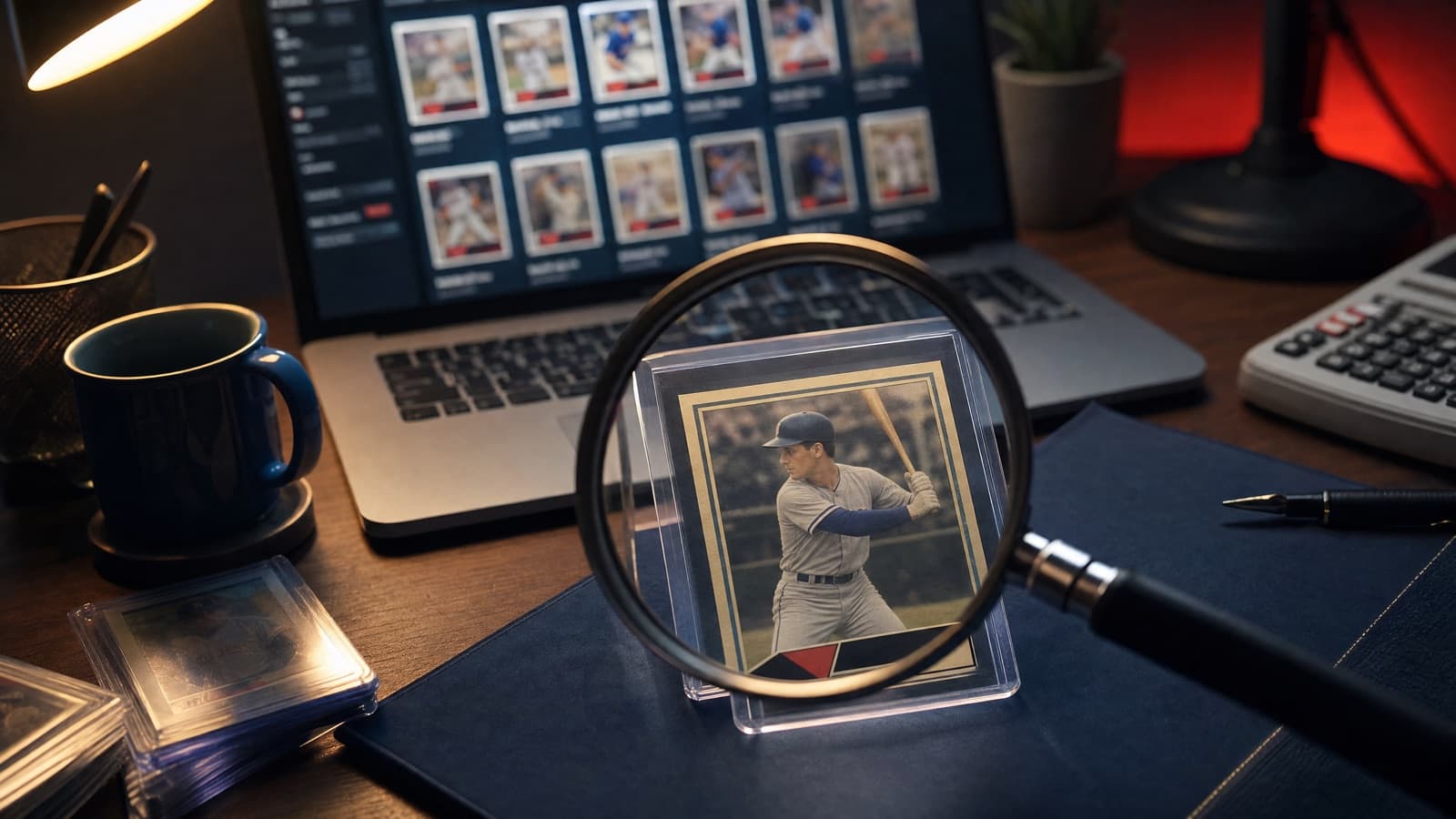
The Short Answer
A sports card is worth what a buyer recently paid for the same card in the same condition — nothing else. Look it up on eBay, filter to sold listings, and match the exact card (year, set, parallel, numbering, grade). The average of recent sold prices is your card's real market value. Asking prices, book values, and what you paid are all fiction.
The only number that matters: sold comps
A 'comp' is a comparable sold listing — proof of what a real buyer actually paid. Not what a seller hopes to get, not what a price guide says, not what the card 'should' be worth. The market speaks in completed sales, and everything else is noise.
This is the single most important idea in card values, and most people who ask 'what's my card worth' have never looked at one. Five minutes of comps beats five opinions.
How to look up your card's value, step by step
Grab the card and do this:
- Identify the exact card: year, brand, set, card number, and any parallel markings (colored border, foil pattern, serial number like /99).
- Go to eBay and search those details — e.g. '2024 Prizm Drake Maye silver rookie'.
- Filter to Sold Items (left sidebar on desktop, filter menu on mobile).
- Match condition: if your card is raw (ungraded), compare to raw sales. If it's graded, match the grade exactly — a PSA 9 and a PSA 10 are different markets.
- Average the 5–10 most recent sales. That range is your card's current market value.
Why asking prices and book values lie
Anyone can list any card for any number — a $10 card with a $500 ask isn't worth $500, it's worth $10 to a seller with imagination. Book values and price guides lag the market by weeks or months and describe a market that no longer exists. Sold comps are the only source that can't lie to you, because the money already moved.
What actually moves a card's value
Four forces do most of the work:
- The player — performance, hype, awards, and Hall of Fame trajectory. Card prices are really player prices.
- Rarity — serial-numbered cards (/99, /25, 1/1), short prints, and case hits carry scarcity premiums.
- Condition and grade — the gap between a raw card and that card in a PSA 10 can be 5x or more. Centering, corners, edges, surface.
- The set — flagship rookies (Topps Chrome, Prizm) hold value better than obscure sets. Brand matters.
When to ask a human
Comps cover 95% of cards. The other 5% — rare 1/1s, vintage, oddball issues, cards with no recent sales — need context that only comes from handling thousands of cards. That's when you ask a dealer who'll give you a straight answer instead of a sales pitch. We do it free in our DMs, because an educated collector is a better customer for everyone.
Frequently Asked Questions
Is my old baseball card collection worth money?
Maybe — age alone doesn't create value. Most 1980s–90s 'junk wax' era cards were printed by the millions and are worth pennies, even in perfect condition. The money lives in star rookies, Hall of Famers in high grade, low-numbered cards, and pre-1970 vintage. Comp your best names first.
My card has no sold comps. What's it worth?
No comps means a thin market, not necessarily a valuable one. Check for sales of the same player's similar cards — same year, similar set tier, similar numbering — and price relative to those. True 1/1s and rare vintage are the exceptions where an expert appraisal is worth the ask.
Are base cards worth anything?
Usually a few cents to a dollar — base cards are the bulk of every print run. The exceptions: star and rookie base cards from premium sets, which can run $5–50 raw, and vintage base of big names. Bulk base has value by the pound to dealers, not by the card.
Does a card being autographed automatically make it valuable?
No — an autograph is only worth what the signer and the card's authenticity support. A certified on-card auto of a star rookie is real money; a sticker auto of a backup long-snapper is a nice memory. Comp the exact card and see.
See real market prices.
Every card in our vault is priced off live eBay comps — because that's where they actually sell. Browse around and calibrate your eye.
Browse the Vault