
The Short Answer
To spot a fake sports card, compare it directly against a known-real copy of the same card: check the card stock, print sharpness, font details, and gloss. Counterfeits concentrate on high-value rookies, autographs, and patches. The stronger defense is the seller — buy only from sellers with public track records and buyer protection, and walk from deals priced too far under comps.
The two kinds of fake: cards and sellers
Most collectors picture a counterfeit card — a printed copy of a valuable card. That exists, especially for big-ticket rookies and vintage. But the more common scam in 2026 is the fake transaction: a real photo of a card the seller doesn't own, a resealed box with the hits pulled out, or a 'mystery pack' stuffed with bulk. Checking the card matters. Checking the seller matters more.
How to check a card itself
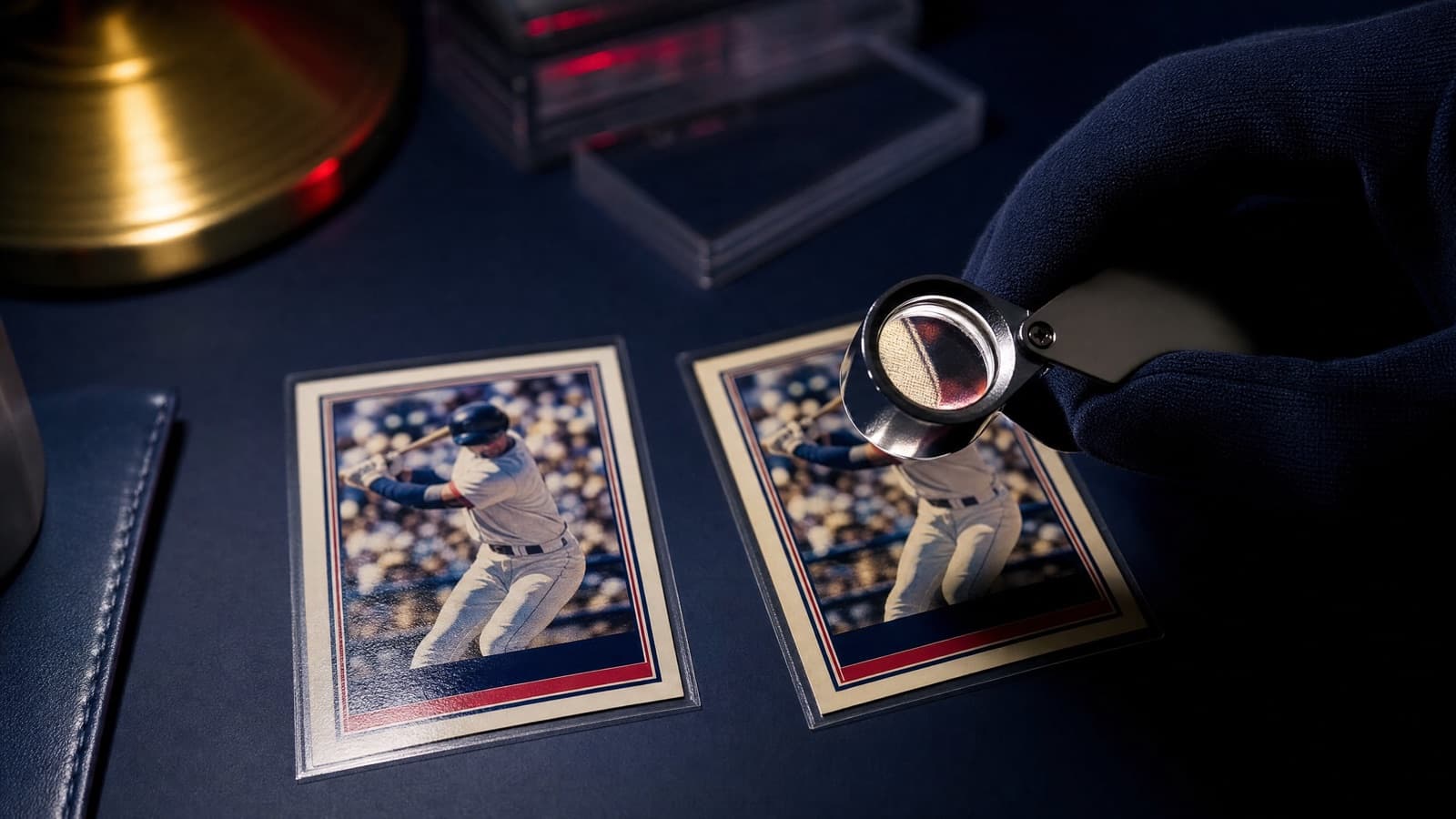
Counterfeits fail in the details. Compare side-by-side with a confirmed real copy (a cheap common from the same set works, since fakers fake the expensive card, not the set):
- Card stock — real cards have a specific weight, stiffness, and edge cut. Fakes often feel flimsy, waxy, or too glossy.
- Print pattern — under a loupe or phone macro, real offset printing shows clean rosette dot patterns; fakes show blurry, muddy, or inkjet-style dots.
- Fonts and logos — fakers get close, not exact. Letter spacing, foil stamp sharpness, and logo edges are the usual tells.
- Serial numbers — on numbered cards, check the stamp font and alignment against known real copies. Wrong font = walk away.
- The light test — shine a bright light behind the card. Real card stock blocks light fairly evenly; many fakes glow or show layering.
How to spot a fake autograph
Card-company autos come with the strongest proof: they were witnessed or stickered under the manufacturer's authentication program, and the card says so. An autographed card with no manufacturer or third-party authentication is only worth what you can verify — compare the signature against multiple known exemplars, be suspicious of 'too perfect' signatures on cards that shouldn't have them, and remember that a certificate of authenticity from a company nobody's heard of is decorative.
Resealed and searched product
Sealed wax gets tampered with: boxes searched for hits then resealed, loose packs weighed for relics, retail repacks returned to store shelves. Buy sealed product from hobby shops and breakers with reputations to lose, inspect seals on camera when possible, and treat loose retail packs from strangers as entertainment, not inventory. This is exactly why we rip sealed product live on camera — provenance you can watch beats provenance you're told about.
Seller red flags that matter more than the card
- Prices dramatically under comps — a real seller knows what their card is worth.
- Stock photos or photos that appear in other listings.
- No history: fresh account, no feedback, no community, no face.
- Pressure: 'someone else is about to buy it' is the oldest line in the book.
- Payment off-platform — the moment you leave eBay/Whatnot payments, you leave buyer protection.
What to do if you already bought a fake
Act fast and stay on-platform: open a case through eBay, Whatnot, or your credit card with photos and your evidence. Buyer protection on the major platforms genuinely works when the claim is documented. Then leave accurate feedback — the next collector deserves the warning you wish you'd had.
Frequently Asked Questions
Does the light test really work on fake cards?
As a first-pass check, yes — hold the card over a bright flashlight in a dark room. Genuine card stock blocks light with an even, layered density; many counterfeits glow unevenly or show a sandwich of paper layers. It's a screening tool, not proof — always combine it with print, font, and stock checks against a known real copy.
Are graded cards safe from counterfeits?
Mostly, with a caveat: fake slabs exist too. Verify the cert number on the grader's website (PSA, BGS, and SGC all have free lookups) and check that the label, lighthouse logo, and slab seams match the grader's current design. A legit cert number that matches the card in front of you is about as safe as the hobby gets.
Which cards get faked the most?
Whatever's expensive: high-end star rookies (Jordan, Jeter, Brady, Ohtani, and the current rookie class's best cards), big patch autos, and iconic vintage. Nobody counterfeits a $3 common — which is why the fakes concentrate exactly where your guard should be highest.
Am I protected if I buy a fake on eBay or Whatnot?
Yes — both platforms have buyer protection that covers counterfeits and items not as described, and both side with buyers who document fakes. The protection only applies when you pay through the platform, which is why 'message me to deal direct' is a one-way ticket to losing your money.
Authenticity is the whole point.
Every card in our Vault was pulled from sealed product and sells through eBay with buyer protection. Straight shooters in a hobby that needs them.
Shop The Vault