
The Short Answer
Grade a card only when its graded value minus grading fees clearly beats its raw value — typically star rookies, serial-numbered chase cards, and vintage in excellent condition. At $15–$25 per card, grading a $10 card is burning money, and a mediocre grade can actually lower value below raw. Check sold comps for both raw and graded versions before submitting anything.
What card grading actually is
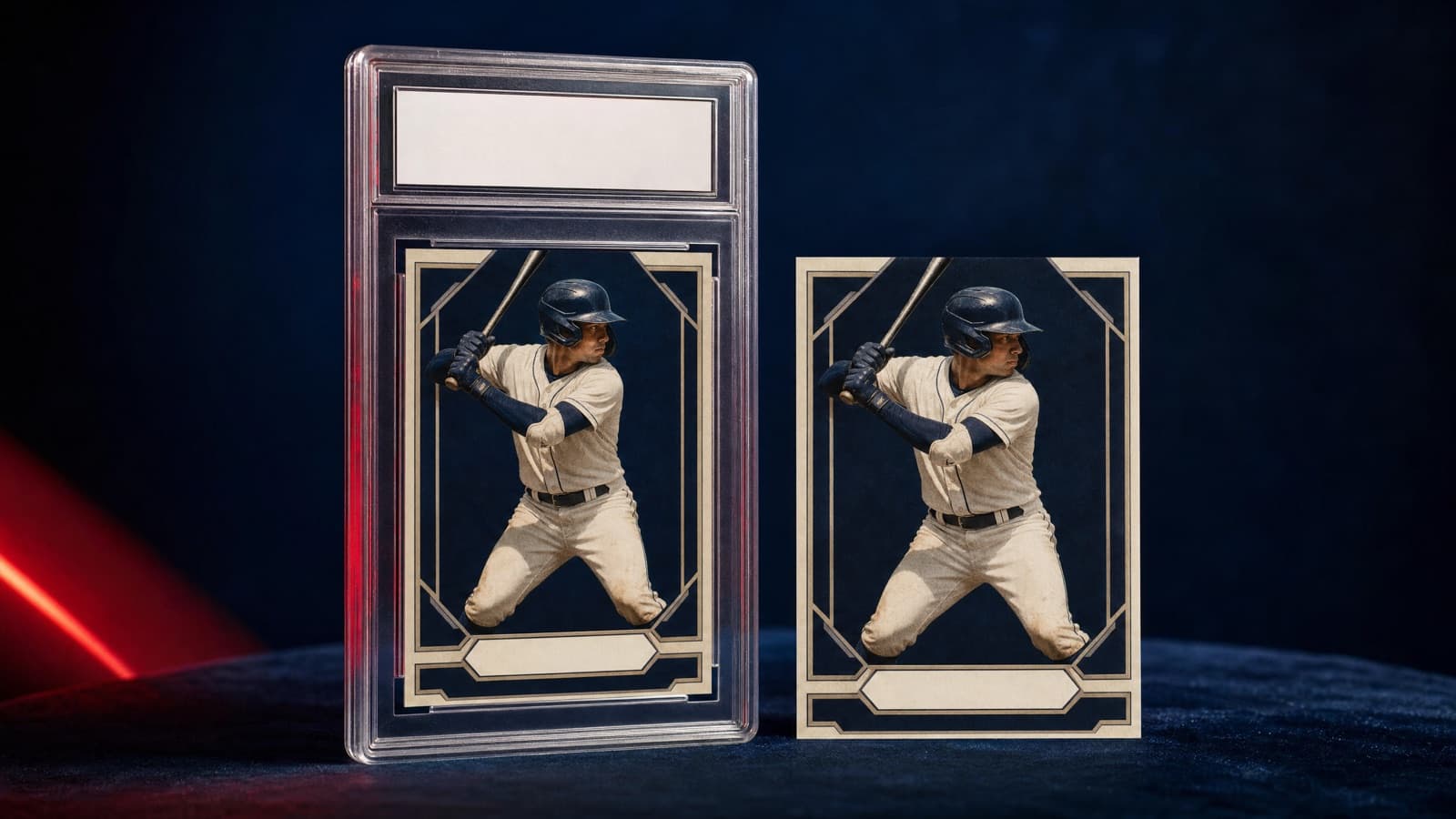
A grading company authenticates your card, evaluates its condition on a 1–10 scale (centering, corners, edges, surface), and seals it in a tamper-evident slab with the grade on the label. The slab does two things: it guarantees the card is real, and it removes all arguments about condition. That certainty is what buyers pay for — a graded card is easier to buy, sell, and ship sight-unseen.
PSA vs. BGS vs. SGC — what's the difference?
Three companies dominate, and the market treats them differently:
- PSA — the market leader. PSA 10s command the highest resale premiums in most sports cards, and the red-label slab is the most liquid. The default choice for modern cards you plan to sell.
- BGS (Beckett) — known for subgrades (each of the four criteria scored separately) and the legendary black-label 10. Strong with high-end modern, but a BGS 9.5 often sells closer to a PSA 9 than a PSA 10.
- SGC — the vintage specialist, with the tuxedo-black slab collectors love for pre-war and classic cards. Respected, usually a bit cheaper, growing share in modern.
The math: when grading pays
Grading is an investment decision, so run it like one. Look up your card's sold comps raw, then the same card in the grade you realistically expect (be honest — look at it under bright light first). Subtract the grading fee, shipping, and insurance. If the expected graded value minus costs beats the raw value by a comfortable margin, grade it. If the numbers are close, don't — you're paying fees to take risk.
A rough rule: the card should be worth at least $50–75 raw, or be a card where the raw-to-graded multiplier is huge (star rookie Prizm silvers, big-numbered low-pops). Anything under that and the fees eat the upside.
When NOT to grade a card
More cards shouldn't be graded than should. Skip the slab for:
- Base cards and commons — the fee exceeds the card's value, forever.
- Cards with visible flaws — a soft corner or print line means a 7 or 8, and low grades often sell below raw.
- Low-value cards you love — if it's staying in the PC, a $20 one-touch holder protects it for 1% of the cost.
- Bulk 'everything must go' submissions — grading 100 cards hoping five pay for the rest is a lottery with extra steps.
How long does grading take and what does it cost?
As of 2026, standard tiers run roughly $15–$25 per card at the big three, with bulk rates lower and express tiers much higher. Turnaround ranges from a few weeks (express) to a few months (economy), and declared-value limits per tier matter for expensive cards. Prices and wait times change constantly, so check the graders' sites before you build a submission — and always factor both-way shipping and insurance into your math.
Frequently Asked Questions
Does a PSA 10 double a card's value?
Sometimes far more — and sometimes barely anything. The raw-to-gem multiplier depends on how hard the card is to gem: modern chromium cards with high gem rates might only gain 20–40%, while condition-sensitive vintage or low-pop rookies can multiply 5–10x. Check actual sold comps for both versions before assuming any multiplier.
What is a pop report?
Short for population report — the grader's public count of how many copies of a card exist at each grade. A card with 12 PSA 10s in existence commands a scarcity premium over one with 12,000. Always check pop before grading for value; a low pop at high grade is where the real premiums live.
I just pulled a monster in a break. Should I grade it immediately?
Probably — big chase cards are exactly what grading exists for, and the graded premium on a monster usually dwarfs the fee. Sleeve it immediately, handle it by the edges, and don't wipe it with anything (cleaning attempts cause surface damage and lower grades). Then run the comps and pick your grader.
Can a graded card be worth less than raw?
Yes — a low grade stamps the flaw on the label forever. A raw card with a soft corner might sell on hope; that same card slabbed as a 6 sells on reality, and reality is usually cheaper. This is why the honest pre-grade inspection matters more than any other step.
Shop cards the market already priced.
Raw and graded, priced off live comps. No stories about what a card 'should' be worth — just what it sells for.
Browse the Vault