
The Short Answer
To build a team PC on a budget, start with a team lot — a bulk stack of your team's cards at a low per-card price — then fill gaps with cheap singles of the players you care about. Set a monthly cap, buy everything off sold comps, and treat break spots on your team as entertainment, not collecting strategy.
Why a team PC is the best cheap collection
Most collectors start scattered — a little of this player, a random box of that set — and end up with a pile that means nothing to them. A team PC fixes it with focus: every card in the binder is your team, so every card matters. Focus also happens to be the cheapest way to collect, because team lots and team singles are priced for fans, not for hype-chasers.
The other quiet benefit: a team PC survives the hobby's mood swings. Player markets crash. Your team is still your team.
Step one: start with a team lot
The fastest start in collecting is one team lot on eBay — twenty to fifty cards of your squad for the price of a blaster. You'll get franchise legends, current starters, and a pile of base that fills binder pages immediately. Sort it, sleeve the keepers, and set the doubles aside as trade bait or gift material for the next young fan in your life.
One rule: buy the lot you can see. Real photos of the actual stack, a card count that matches, a price that makes sense per card. Our card lots guide covers the red flags if you want the full checklist.
Step two: fill the gaps with singles
Once the lot lands, you know what you have — and what you're missing. That's when singles take over: the $2 rookie of the new starter, the $5 shiny parallel of your favorite player, the one throwback legend the lot didn't include. Cheap singles of your team are the backbone of the whole project, and comps keep you honest — check sold listings, buy under the average, repeat.
This is also where the collection becomes yours. The lot is the foundation; the singles you hunted are the personality.
Step three (optional): break spots on your team
A pick-your-team break spot is the only break format that fits a team PC: you buy your team, you get every one of its cards pulled in the break. The honest framing — a spot is a fun night with upside, not a reliable way to build the PC. Some nights your team hits a monster, some nights it strikes out. Buy the spot for the show, and let any hits count as a bonus addition to the binder.
The budget rules that keep it fun
- Set a monthly number and keep it — $25 a month builds a serious PC in a year.
- Everything gets comped. Five minutes on sold listings beats any asking price.
- Skip the FOMO tax. When your team's rookie is the hottest card in the hobby, that's the week to buy last year's guys instead.
- Doubles are assets — trade them, sell them, or hand them to a kid. Dead cardboard helps nobody.
Storage and organization
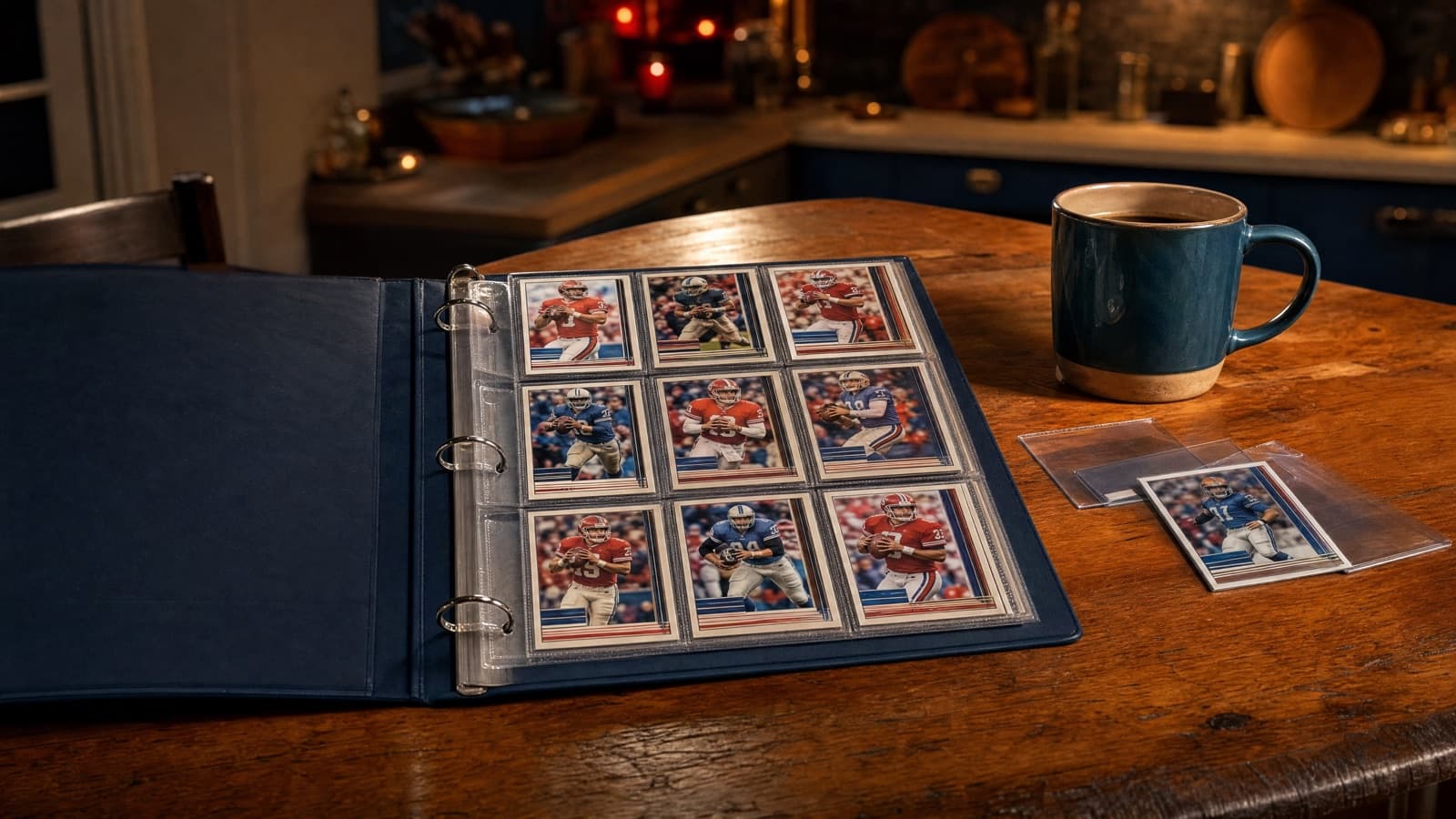
A cheap binder with nine-pocket pages is the natural home of a team PC — organize by year, by player, or by whatever order makes you happy when you flip through it. Penny sleeves for anything you'd be mad to scratch, top loaders for the few genuinely good cards, and the whole operation runs about $15 in supplies. The binder on the shelf beats the box in the closet every time.
Frequently Asked Questions
How much does it cost to start a team PC?
$20–30 is a real start: one team lot gets you dozens of cards in a single purchase. From there, $5–10 here and there on singles keeps it growing. The collectors with the best team PCs didn't outspend anyone — they out-focused everyone.
Should I collect the base cards of my team?
If they make you happy, yes — that's the entire point of a PC. Base cards of your team cost pennies and fill the binder with the guys you actually watch on Sundays. Value snobs will tell you base is worthless; team collectors know better. Worthless to the market and valuable to you are fully compatible.
What happens when a player leaves my team?
Your call, and there's no wrong answer. Most team collectors keep the player in the uniform years — the Josh Allen cards stay in a Bills PC forever — and stop adding him in the new team's jersey. The PC is your team's history, not its current roster.
Is a team PC a good investment?
No, and treat anyone who pitches it that way with suspicion. A team PC is a collection — built for the joy of the binder, not the resale value. Some individual cards will rise and fall with the market, but the return on a team PC is measured in Sunday afternoons, not percentages.
Start with your team's stack.
Live team and player lots from our eBay store — every card photographed, prices off real comps, shipped from New York in 1–2 days.
Find Your Team's Lot