
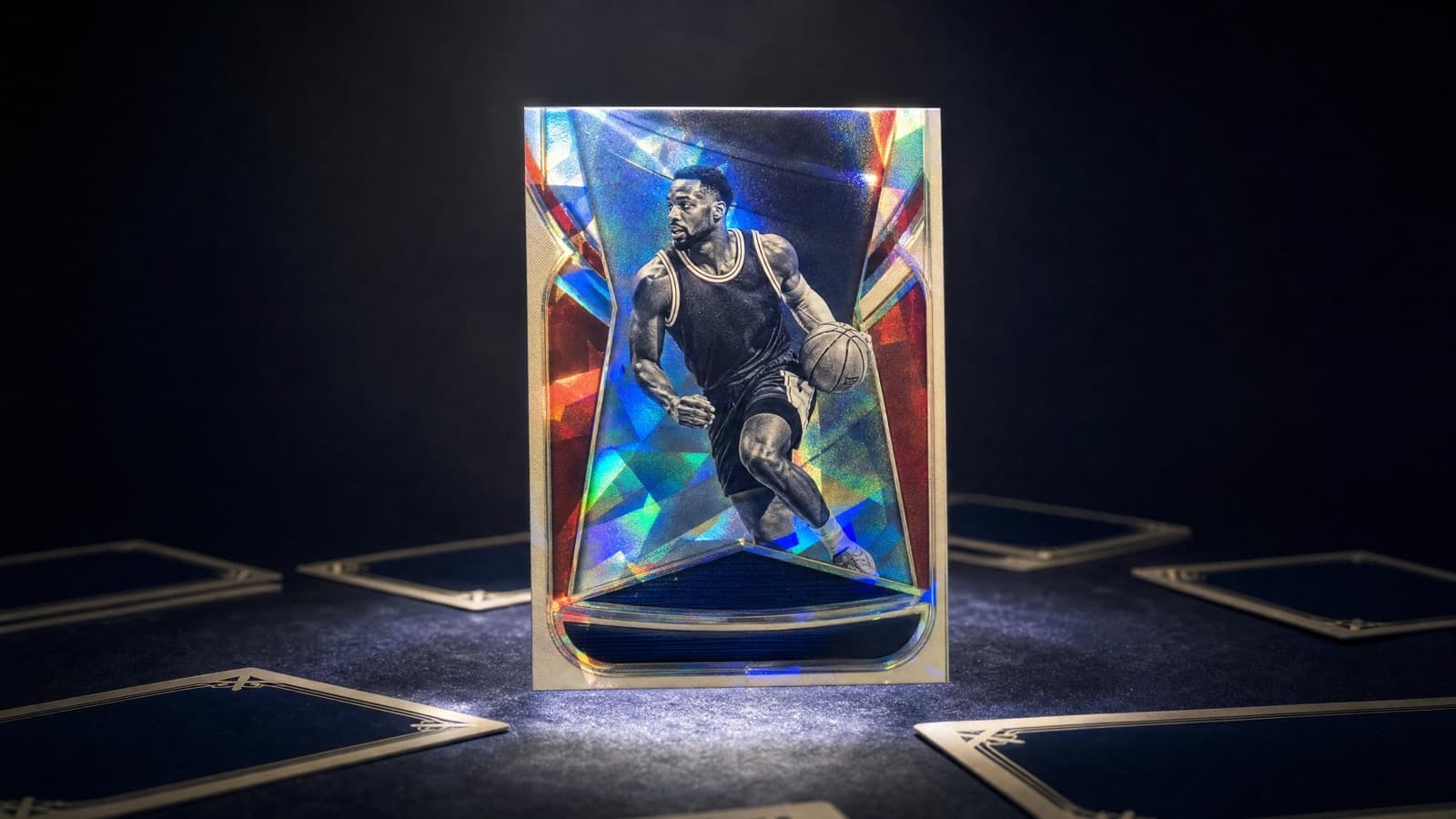
The Short Answer
A case hit is a rare insert card seeded at roughly one per sealed case of a product — about one in every 8–20 boxes. Famous examples include Kaboom, Downtown, and Color Blast. Case hits carry big premiums because supply is tiny by design: every box has packs, but only one lucky box per case has the case hit.
What actually makes a card a case hit
Manufacturers seed cards at stated odds: one per pack, one per box, one per case. That last tier is the case hit — an insert so scarce that opening a single box means you'll almost certainly never see one. The math is the whole point: if a case holds 12 boxes, the case hit effectively appears in one of every 12 boxes' worth of packs, and the print run shrinks accordingly.
The famous names are insert sets built for this tier: Kaboom (the comic-book explosion design), Downtown (the cartoon cityscape of a player's town), Color Blast (the neon splash), and Stained Glass (the cathedral-window look). Each is instantly recognizable, which is half their value — a case hit has to look like one from across the room.
Why case hits command real money
Three forces stack up: scarcity (tiny print runs, no serial number needed), design (the iconic insert art is genuinely collectible), and player (a Downtown of a star quarterback is a different universe from a Downtown of a backup). Unlike numbered cards, where the stamp does the talking, a case hit's rarity is structural — everyone who knows the product knows exactly how rare the pull is.
That structural rarity also makes case hits liquid: buyers don't need a serial number explained to them. The design is the reputation.
How to identify a case hit in your stack
Three checks, thirty seconds:
- The design test — does it look like nothing else in the set? Case hits are deliberately loud: cartoon art, explosions, cityscapes, stained glass.
- The checklist test — look up the product's insert list. Case-hit sets are always labeled with their case-level odds (often '1:case' or odds like 1:288 packs).
- The comps test — search the card on eBay sold listings. Real case hits of recognizable players comp in the hundreds or more, which settles any identification doubts fast.
Chasing vs. buying: the honest math
If you want a specific player's Kaboom, buy the single. Chasing one through sealed product is the worst odds in the hobby — you're hoping one specific card lands in the one-per-case slot across thousands of cases. Breaks soften that math a little: a spot in a case break at least guarantees you're watching the whole case get ripped, which is where case hits live.
And if you ever pull one: sleeve it on camera or immediately, top-load it, and grade it if it's a star — case hits in high grade are exactly the cards grading exists for.
Frequently Asked Questions
What are the odds of pulling a case hit?
Roughly one per sealed case — typically one in every 8 to 20 boxes, depending on the product's case size. In pack terms that can run from one in a few hundred packs to one in several hundred. Check the product's stated odds on the box or checklist; '1:case' or triple-digit pack odds mark the case-hit tier.
Are Kaboom and Downtown cards numbered?
Usually no — and that's the twist. Kaboom, Downtown, and most case-hit inserts carry no serial number; their scarcity comes from the case-level seeding, not a printed run. A few case-hit sets do have numbered parallel versions, which sit an entire tier above the base case hit.
What's the most valuable case hit?
The ceiling moves with the market, but the formula is stable: iconic insert set (Kaboom and Downtown lead) plus superstar player plus high grade. Star quarterback Kabooms in PSA 10 have sold for five figures. The player multiplies everything — a case hit of a legend is a grail; the same card of a bench player is a great story.
Is it worth buying a case break spot to chase case hits?
As entertainment with a real sweat, yes — a case break means the case hit (if the case has one) is pulled live, and every spot holder watches it happen. As a strategy for acquiring one, no — buy the single. A break spot is a ticket to the show; the case hit is the lottery ball that might bounce your way.
Chase responsibly.
The case hits we've pulled on camera end up in the Vault — priced off comps, shipped fast. Skip the case-odds lottery and buy the card.
Shop The Vault