
The Short Answer
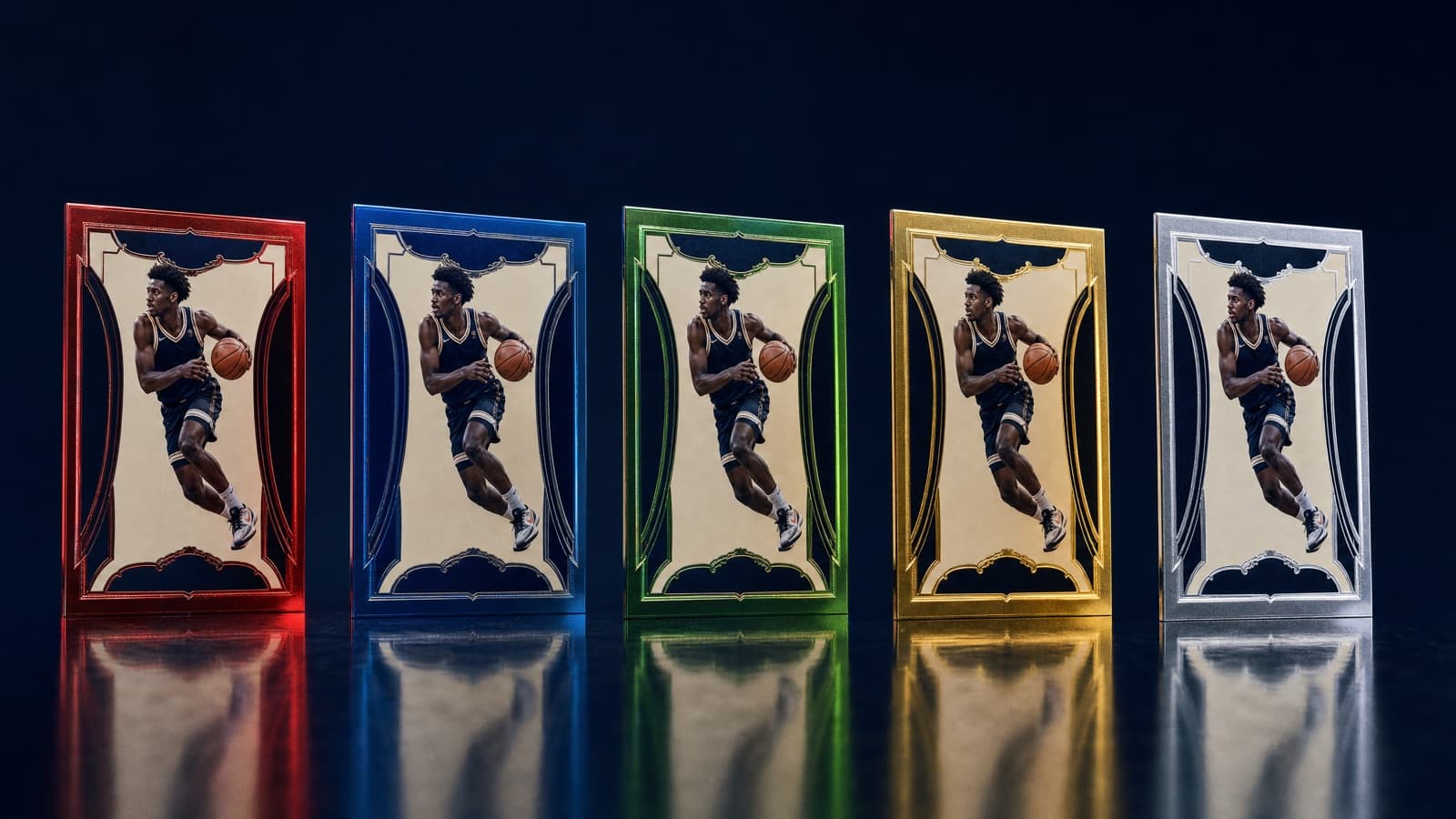
A parallel is a card that shares the base card's photo and card number but is printed with a different color, pattern, or foil finish — usually in smaller quantities. Parallels range from common unnumbered versions to numbered editions like /99, /25, /10, and 1/1. The rarer the parallel and the bigger the player, the higher the value.
Parallel vs. insert vs. base — knowing what you're holding
The base card is the standard issue. A parallel is that exact card — same photo, same card number — wearing a different outfit: a silver shine, a red border, a pulsar pattern. An insert is a different card entirely, with its own design and numbering. The quick check: if the card number matches the base checklist, it's a parallel. If it has its own set name or number scheme, it's an insert.
The Prizm rainbow, explained
Panini Prizm turned parallels into the hobby's most famous chase: one rookie card, dozens of versions, collectors chasing the full 'rainbow.' The ladder roughly runs from common to legendary — Silver (the iconic unnumbered shine), then color parallels (Red, Blue, Green), then pattern parallels (Hyper, Mojo, Pulsar, Disco), then the numbered tiers (/299 down to /5), and finally the monsters: Gold /10, Black 1/1. Other brands have their own rainbows — Topps Chrome Refractors play the same game — but 'the rainbow' in conversation almost always means Prizm.
How to identify your parallel
Three checks, ten seconds:
- Flip it over — the back usually names the parallel and, if numbered, shows the stamp (e.g. 18/99).
- Compare to the base — same photo and number with different color or shine confirms parallel.
- Check the set's checklist — every product publishes its parallel list with print runs and odds.
Which parallels actually hold value
The hierarchy is honest: numbered beats unnumbered, low number beats high number, popular parallel beats obscure one, and everything is multiplied by the player. A Silver Prizm of a star rookie is liquid gold; a Silver of a third-stringer is a shiny dollar. Retail-exclusive parallels (the pink, purple, and green waves) look great but rarely carry hobby-tier premiums — scarcity and demand, not sparkle, set the price.
Frequently Asked Questions
Is a Silver Prizm numbered?
No — the Silver Prizm is unnumbered, which surprises everyone. Its value comes from being the most recognizable parallel in the hobby with genuinely limited distribution, not from a printed run. It's the exception that proves the rule: iconic demand can carry an unnumbered card.
How do I tell a parallel from the base card?
Same photo, same card number, different look — color border, foil pattern, or shine. If you're unsure, pull up the base card image from the set checklist and compare: if the design matches but the color doesn't, you've got a parallel. The back of the card almost always confirms it in writing.
Are retail parallels worth anything?
Usually a small premium over base, not a fortune. Retail-exclusive parallels are printed in much larger quantities than hobby versions, and the market prices that honestly. The exceptions: star rookies and low-numbered retail exclusives, where player demand can overpower print run.
What does 'chasing the rainbow' mean?
Collecting every parallel version of one specific card — all the colors, patterns, and numbered tiers of, say, a favorite rookie. Rainbow chases are some of the most dedicated projects in the hobby: the commons are cheap, the /10 and 1/1 are a quest. Completing one is a genuine achievement collectors respect.
Hunt your color.
Singles from our live breaks, comps-priced, from base to numbered. Find your guy in your color.
Browse the Vault